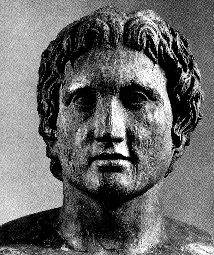
Alexander the Great |
Alexander the Great is known by three names: Alexandros Phillipou Makedonon, Alexander III of Macedon, and Alexander the Great. He was born in July of 356 BCE in Pella, Macedonia. His parents were Phillip II and Olympias, though there are some legends that say Zeus was his father. It is also said that Olympias was a decendent of Achilles and Phillip was a decendent of Hercules. Olympias was very protective of her son. As a youth, Alexander was strong and ambitous. When he was 12, he tamed a wild horse called Bucephalus which no one else could tame. It was this horse he rode in his conquests and when it died in India, he built a city and named it Bucephala. Young Alexander loved Homer. He knew the Illiad by heart and slept with a copy under his pillow. From age 13 to age 16, Alexander and other aristocratic Macedonian boys were taught by Aristotle.
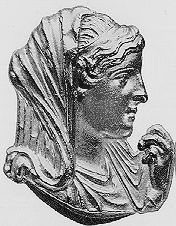
Olympias, Mother of Alexander the Great |
At the young age of 16, Alexander began his conquests. While his father was out fighting the Byzantium, he left Alexander in charge of his seal. Alexander conquered the capital city of the Maedi and named it Alexanderopolis. At 18, he commanded the left wing of his father's calvary at battle of Chaeronea and broke the Sacred Band of Thebes. Alexander became king of Macedonia at the age of 20, when Phillip, his father, was assasinated on the way to the theatre during his daughter's wedding feast. Upon his father's death, Alexander was presented to the army as king. Alexander had everyone suspected to be behind his father's murder executed, as well as members of the opposing faction, including members of Phillip's family.
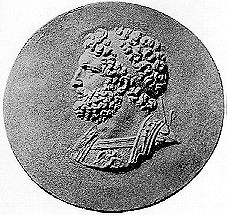
Phillip, Father of Alexander the Great |
After being declared king of Macedonia Alexander traveled to Greece. While in Corinth, he was declared supreme commander of all Greeks for the invasion of Persia. It was Phillip gave birth to the idea of an invasion of Persia, but it was Alexander who matured the plan. He had an army fully capable of defeating the Persians. It included a range of soldiers from lightly armed archers to soldiers with shields and 5.5m long spears. His army was also accompanied by non-military persons such as scientists, historians, and explorers. The Persian conquest was successful. It is interesting that Alexander gave Darius II's wife the chance to return to Persia after being captured and she refused. When Alexander went to Egypt, he was celebrated as their liberator from Persian rule. In Memphis, he was crowned with the traditonal double crown of Egypt. After conquering Babylon, Alexander found the Darius III, the last emporer of Persia, dying. He organized his funeral with full imperial honors. Alexander then conquered more of Asia, including India. There was trouble in his empire though. Alexander's years of absence, and rumors of his death had weakened his hold on many teritories and many of his governers were executed. Meanwhile Alexander celebrated the conquest of the Persian empire in Susa. Alexander himself took Persian wives, and he rewarded any of his men who did so. The Macedonians of course had a problem with this, but when Alexander sent ten thousand vetrans back with gifts, the conflict was averted.
Coin bearing Alexander the Great's Image |
Alexander like many great leaders died mysteriously. He died in Babylon at the age of 33 from poisoning. He had been drinking a lot of wine and downed one glass in a single gulp. He was then in great pain and died. He was asked "To whom do you leave the kingdom?" and replied "To the best," those were his last words. After a ten day fever, he died. His golden tomb was melted down into coins centuries later. It was replaced by an Alabaster one which disappeard around 4 CE.